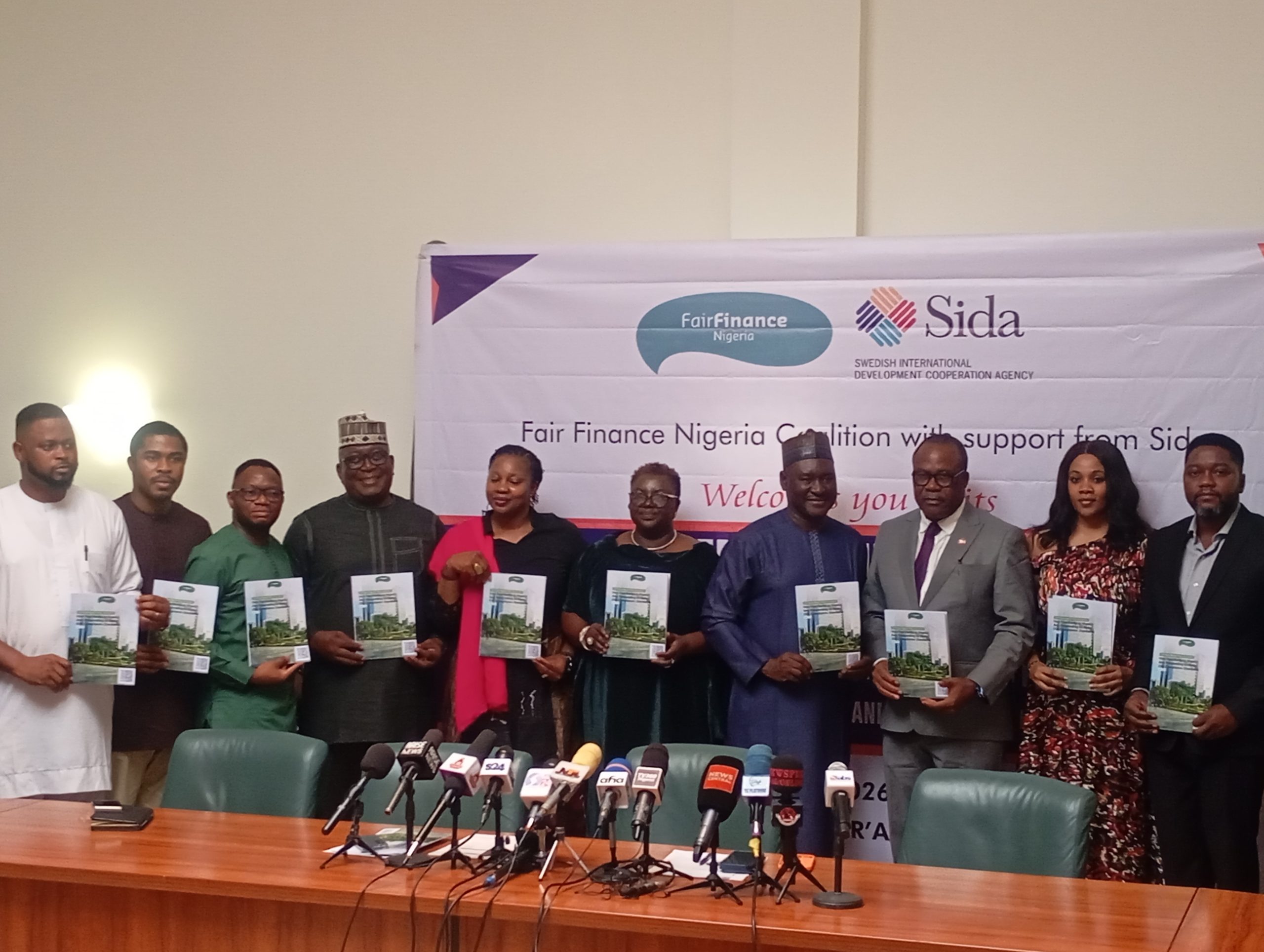
The Executive Director of the Civil Society Legislative Advocacy Centre (CISLAC), Auwal Ibrahim Musa Rafsanjani, has expressed concern over poor sustainability and responsible finance practices in Nigeria’s banking sector, following the unveiling of a new policy assessment report in Abuja.
The report, launched was in Abuja, evaluating four major banks—Access Bank, Standard Chartered Bank, United Bank for Africa, and Zenith Bank—against more than 400 global environmental, social, and governance (ESG) indicators.
Presenting the findings, Rafsanjani said the report, titled “How Four Banks in Nigeria Are Responding to Global ESG Compliance Standards,” showed the institutions recorded an average score of 1.7 out of 10, indicating significant gaps in sustainability practices.
He noted that while the banks may meet basic regulatory requirements, sustainability principles are yet to be fully integrated into core financing decisions, describing the situation as largely “compliant on paper” without genuine commitment.
The report highlighted major shortcomings, including zero scores across all four banks in tax transparency, with no disclosures on country-by-country reporting or links to tax havens—an issue Rafsanjani warned could undermine global anti-corruption efforts and enable illicit financial flows.
On climate action, the banks scored an average of 0.9, with findings showing continued financing of high-emission sectors without credible transition plans, despite Nigeria’s vulnerability to climate change. Concerns were also raised over weak commitments to human rights, biodiversity protection, and host community welfare.
Rafsanjani, however, acknowledged modest progress in internal policies such as labour standards, gender equality, and anti-corruption measures, but stressed that these gains are outweighed by deficiencies in external financing practices.
He described the current framework as outdated, noting that the Nigerian Sustainability Banking Principles introduced in 2012 encourage a “tick-box” compliance culture rather than accountability.
He called on the Central Bank of Nigeria, Chartered Institute of Bankers of Nigeria, Bank Directors Association of Nigeria, and relevant National Assembly committees to convene a multi-stakeholder dialogue to reform and modernise ESG regulations.
Also speaking, Programme Manager for Accountable Governance at Oxfam, Henry Ushie, said the assessment was not intended to single out banks but to strengthen the financial system.
He emphasised that aligning banking operations with international frameworks would boost transparency, attract investment, and ensure respect for human rights across value chains.
In his remarks, Special Assistant to the Chairman of the Economic and Financial Crimes Commission, Francis Useni, called for improved data quality in future assessments.
He urged the use of more primary data and recommended including indicators that assess banks’ support for anti-corruption investigations, alongside incentives for institutions demonstrating strong ethical compliance.
Meanwhile, CISLAC and the Fair Finance Nigeria Coalition renewed calls for urgent reforms to improve transparency and accountability in the financial sector.
The coalition said strengthening ESG compliance is critical to curbing corruption, preventing capital flight, attracting investment, and ensuring sustainable economic growth.