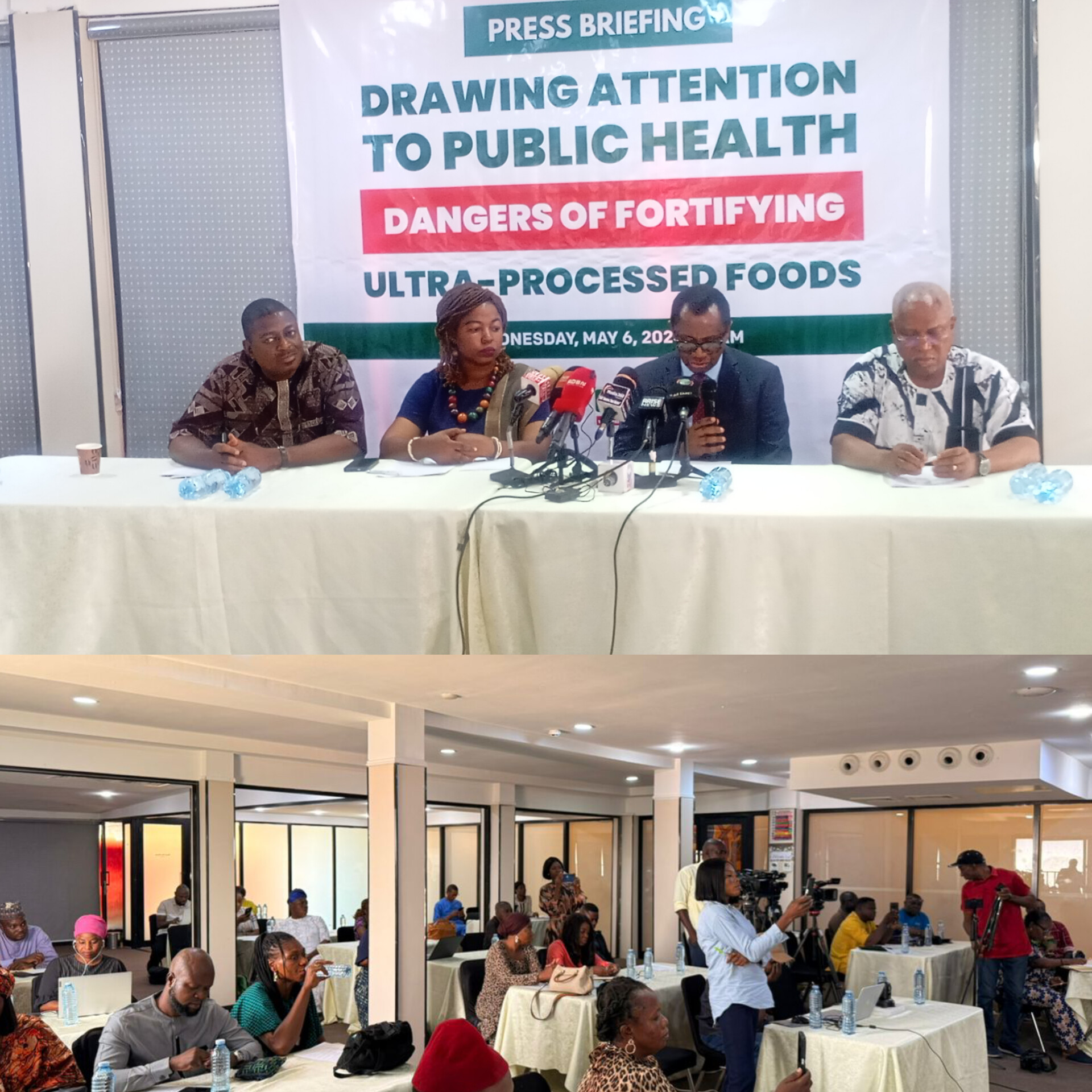
Public health advocates under the Coalition for Healthy Food Advocacy and the National Sugar-Sweetened Beverages Tax Coalition (NSSBTC) have warned against the use of ultra-processed foods as vehicles for food fortification in Nigeria, citing concerns that the approach could worsen the country’s growing burden of diet-related non-communicable diseases (NCDs).
At a press briefing in Abuja themed “Drawing Attention to Public Health Dangers of Fortifying Ultra-Processed Foods,” the coalition called on the Federal Government to reassess its fortification strategy to ensure nutrition policies do not inadvertently encourage unhealthy consumption habits.
Technical Adviser at the Network for Health Equity and Development (NHED), Dr. Jerome Mafeni, cautioned against fortifying high-sodium products such as bouillon cubes, noting that Nigerians already consume nearly twice the recommended daily sodium intake. He described the move as contradicto
ry, warning that enriching such products with micronutrients does not eliminate their inherent health risks.
According to him, increasing the nutritional content of high-salt foods could drive higher consumption and further worsen health outcomes.
The coalition highlighted growing evidence linking Nigeria’s changing dietary patterns to a surge in NCDs, including Type 2 diabetes, hypertension, stroke, and cardiovascular diseases.
Lead Researcher at the Cardiovascular Research Unit, University of Abuja, Prof. Dike Ojji, said cardiovascular diseases now account for about 10 to 11 per cent of deaths in the country, while hypertension affects between 25 and 30 per cent of Nigerians—largely driven by high salt intake and increased consumption of ultra-processed foods.
He warned that the healthcare system may struggle to manage the long-term costs associated with treating such chronic conditions.
While acknowledging that food fortification remains a valid public health intervention, the coalition stressed that its effectiveness depends on the choice of food vehicles.
Executive Director of Corporate Accountability and Public Participation Africa (CAPPA), Akinbode Oluwafemi, said although fortification can address micronutrient deficiencies, the current implementation strategy raises concerns.
He warned that reliance on products such as seasoning cubes, instant noodles, sugary cereals, and refined flours could create a misleading “health halo,” giving consumers the false impression that such foods are healthy despite their high levels of salt, sugar, and unhealthy fats.
Describing the approach as a “double-edged sword,” the coalition said fortifying ultra-processed foods may address nutrient deficiencies in the short term while fueling long-term health complications.
The group also raised concerns about the broader implications for Nigeria’s food system, noting that such strategies often favour multinational food corporations at the expense of local farmers and traditional diets.
According to the coalition, this could undermine food sovereignty and reduce access to indigenous, nutrient-rich foods.
It called on regulatory agencies, including the Federal Ministry of Health and Social Welfare, the National Agency for Food and Drug Administration and Control (NAFDAC), and the Standards Organisation of Nigeria (SON), to review current policies.
The coalition urged the government to prioritise its target of reducing sodium intake by 30 per cent by 2030 as part of efforts to curb NCDs and improve public health outcomes.
It further noted that the burden of care associated with NCDs disproportionately affects women in low-income households, placing additional economic and social strain on families.
Executive Director of Keen & Care Initiative, Josephine Alabi, acknowledged government efforts to tackle NCDs but warned against unintended consequences, particularly for women and children who often shoulder caregiving responsibilities.
She explained that chronic illnesses such as stroke, heart disease, and diabetes complications frequently lead to long-term care demands that limit women’s access to education, income, and personal development opportunities.
Among its recommendations, the coalition advised against using ultra-processed foods high in salt, sugar, and unhealthy fats as fortification vehicles. It also called for policies that promote healthier diets, including improved access to safe and nutritious foods, front-of-pack warning labels, restrictions on misleading health claims, and increased support for local agriculture.
The group also advocated stronger taxation on sugar-sweetened beverages, with proceeds directed toward public health initiatives.
Emphasising the need for policy coherence, Mafeni noted that efforts to reduce sodium intake must align with broader nutrition strategies.
“Public health policy must reduce risk, not repackage it,” he said, urging the government to adopt sustainable, locally driven solutions that prioritise dietary diversity.
The coalition concluded that fortifying unhealthy foods does not make them beneficial, stressing the need for long-term strategies rooted in promoting healthier food systems.