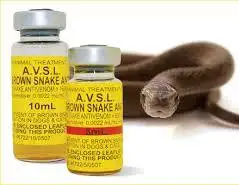
Health experts have called on the Federal Government to prioritise the production and availability of antivenom in hospitals nationwide, warning that limited access to the life-saving treatment is fuelling preventable deaths.
The experts, who are researchers on Neglected Tropical Diseases, said Nigeria records about 43,000 snakebite cases annually, with nearly 1,900 deaths. They attributed the high fatality rate to weak health systems, poor infrastructure, and persistent shortages of antivenom across the country.
They noted that snakebite victims currently pay between N180,000 and N250,000 per dose of antivenom, an amount equivalent to about four months’ earnings for workers on the N70,000 minimum wage. According to them, at least 50 per cent of health facilities lack the capacity to treat snakebite envenoming.
The call followed the recent death of Abuja-based singer Ifunanya Nwangene, 26, who reportedly died after a snakebite. The incident renewed concerns about access to emergency treatment.
In a communiqué issued after its second Annual General Meeting in Gombe, the Toxinological Society of Nigeria described snakebite as a neglected public health emergency. It said the country records about 43,000 cases annually.
Similarly, the Association of Community Pharmacists of Nigeria urged the Federal Government to make antivenom free nationwide and support local production to curb more than 2,000 preventable deaths each year.
A report by the global Strike Out Snakebite initiative showed that half of Nigeria’s health facilities cannot manage snakebite cases. It also revealed that 99 per cent of health workers reported difficulties administering antivenom, the only treatment recognised by the World Health Organisation for snakebite care.
Medical Director of the Snakebite Hospital and Research Centre, Kaltungo, Gombe State, Dr Nicholas Amani, said antivenom is scarce globally because most victims are poor rural farmers with little social or political influence.
He added that even specialised hospitals currently lack adequate supplies, although efforts were underway to address the shortage.
Reacting to the recent death, the Senate called for mandatory antivenom stocking in hospitals and urged state governments and the FCT Administration to establish coordinated emergency referral systems for rapid access to life-saving medicines.
Professor of Medical Microbiology at the University of Jos, Patricia Lar, said Nigeria’s reliance on imported antivenom from India, China, and the United Kingdom has made treatment expensive and inaccessible, especially at the primary healthcare level.
She called for a national policy to subsidise antivenom and support large-scale local production, noting that the current cost is beyond the reach of most citizens.
Also, Professor of Public Health Parasitology, Chinyere Ukaga, said antivenom remains scarce because it has not been prioritised by policymakers. She urged the government to make snakebite treatment a top health priority and provide free antivenom nationwide, alongside increased public awareness and prevention efforts.
Health
Experts urge FG to prioritise antivenom as Nigeria records 43,000 snakebite cases yearly