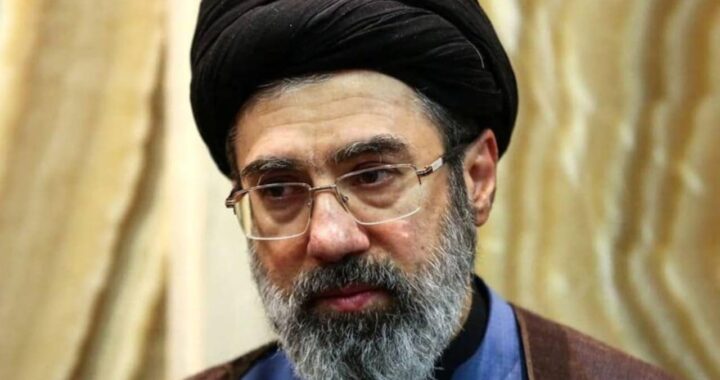
Iran has appointed Mojtaba Khamenei as its new Supreme Leader, a little over a week after the assassination of his father, Ayatollah Ali Khamenei, in a joint United States-Israeli strike that triggered a widening conflict across the Middle East.
Clerics announced Mojtaba Khamenei’s appointment on Sunday, tasking him with leading the Islamic Republic through what observers describe as the most severe crisis in its 47-year history.
Although he has never contested an election or been subjected to a public vote, Mojtaba Khamenei has long been regarded as a powerful figure within Iran’s political establishment. For years, he has operated within the inner circle of the former Supreme Leader and maintained close ties with the influential Islamic Revolutionary Guard Corps (IRGC).
In recent years, he had increasingly been viewed as a likely successor to his father.
Analysts say his emergence as Supreme Leader may signal the continued dominance of hardline factions within Iran’s leadership and could reduce the prospects of negotiations as the war, now in its second week, intensifies.
The 88-member Assembly of Experts, the body responsible for selecting Iran’s Supreme Leader, earlier announced it had reached a majority consensus on the successor without initially revealing the individual. One member of the assembly had stated that the path of Imam Khomeini and the “martyr Imam Khamenei” would continue, suggesting the leadership would remain within the same ideological framework.
Ayatollah Ali Khamenei, who ruled Iran for 37 years after succeeding Ayatollah Ruhollah Khomeini, the leader of the 1979 Islamic Revolution, was killed on February 28 during a United States-Israeli strike on Tehran at the onset of the current conflict.
The Israeli military has since warned that any successor to Khamenei could also become a target, while United States President Donald Trump has suggested the war may continue until Iran’s military leadership and ruling structure are dismantled.
Speaking to ABC News on Sunday, Trump said Iran’s new leader would not “last long” without his approval. “He’s going to have to get approval from us. If he doesn’t get approval from us he’s not going to last long,” he said.
Iranian authorities, however, rejected the suggestion that the United States could influence the selection of the country’s leadership, insisting that only the Iranian people have the right to determine their political future.
Iran’s Parliament Speaker, Mohammad Bagher Ghalibaf, also dismissed the claim, stating on social media that the destiny of Iran would be decided solely by its citizens and not by external actors.