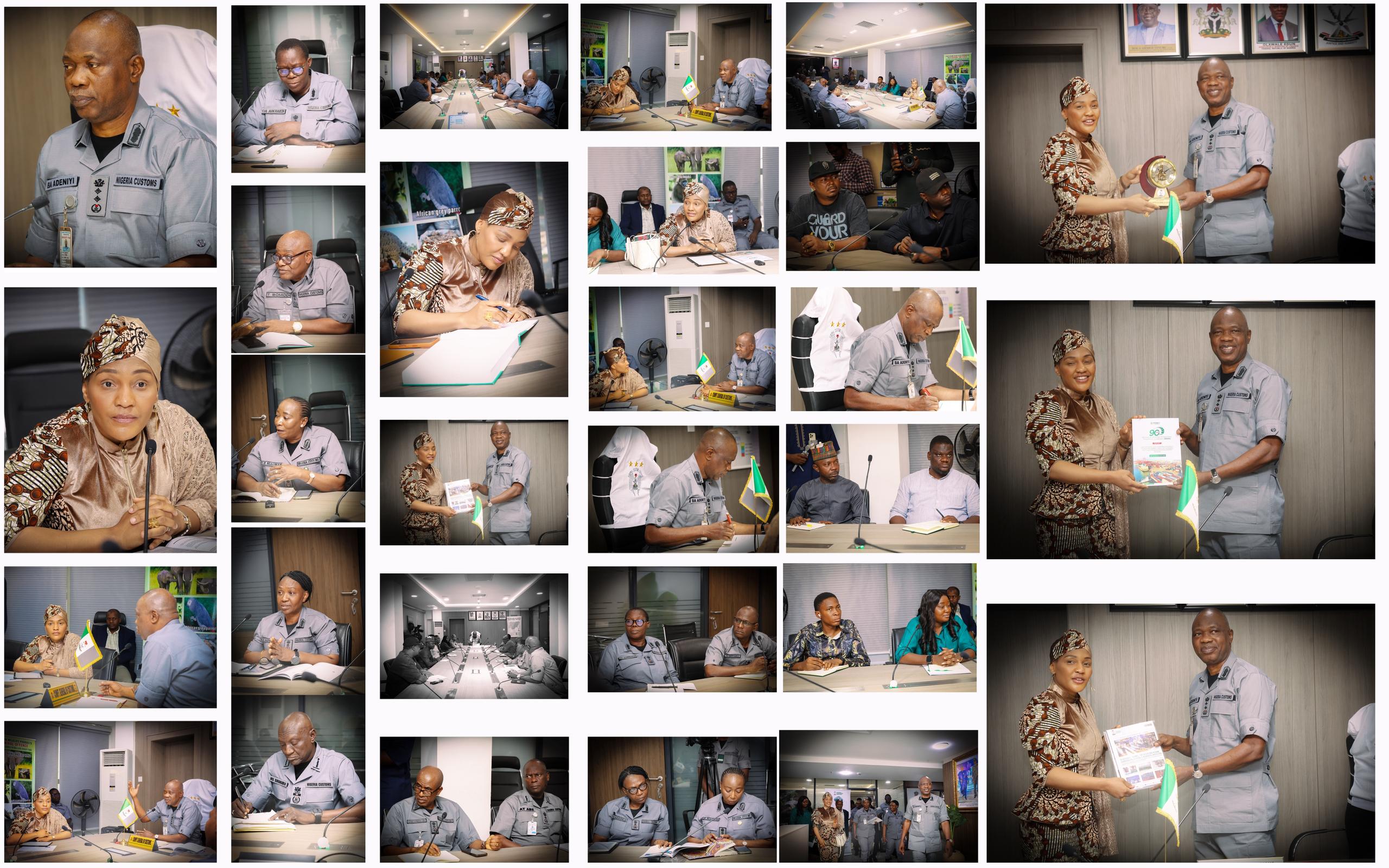
The Nigeria Customs Service (NCS) has reaffirmed its commitment to establishing a paperless port system as part of broader efforts to modernise cargo clearance processes and improve Nigeria’s competitiveness in global trade.
The Comptroller-General of Customs, Adewale Adeniyi, made this known on Friday, March 6, 2026, while receiving the Director-General of the Presidential Enabling Business Environment Council (PEBEC), Zahrah Audu, at the Customs Headquarters in Maitama, Abuja.
Adeniyi said the collaboration between the NCS and PEBEC is aimed at eliminating long-standing bureaucratic obstacles in port operations by leveraging technology to streamline cargo clearance procedures.
He explained that the Service has institutionalised regular consultations with stakeholders, including the American Business Council Nigeria and other trade associations, to address operational concerns and improve cooperation within the port community.
According to him, the engagements enable the Service to identify operational bottlenecks and receive direct feedback from businesses that interact with Customs at Nigeria’s ports.
The Customs boss also revealed that the Service, in partnership with the World Customs Organization (WCO), recently carried out a Time Release Study (TRS) to assess the time and cost involved in cargo clearance at Nigerian ports, using Tin Can Island Port as a case study.
He said the study involved key stakeholders such as shipping companies, terminal operators, the Nigerian Ports Authority, licensed Customs agents and financial institutions. The findings were compiled into a report that was publicly launched on January 26, 2026.
Adeniyi noted that the report has provided useful insights that are currently guiding reforms within the Service, adding that while some stakeholder concerns have been addressed, others will shape future policy adjustments.
On the issue of round-the-clock port operations, the CGC stressed that achieving effective 24-hour operations requires the participation of all actors within the logistics chain.
He explained that previous attempts to deploy Customs officers for continuous operations faced setbacks because other critical operators, including banks, shipping companies and terminal operators, were not fully integrated into the system.
The CGC further disclosed that the Service is making steady progress toward a fully digital Customs environment, with most processes such as pre-arrival documentation, cargo declaration, duty payments and release notifications already automated.
He added that delays often occur when some operators continue to rely on physical documentation, a challenge the Service intends to address in the coming months.
Adeniyi also highlighted ongoing investments in scanning technology and information communication infrastructure to enhance risk-based cargo management and reduce reliance on physical cargo examination.
He said development partners including the World Bank, International Monetary Fund and World Trade Organization have continued to encourage Nigeria to expand the use of non-intrusive inspection technology in line with global best practices.
Earlier, Audu said PEBEC is currently implementing a 90-day Business Environment Enhancement Programme aimed at addressing issues identified in its Business Facilitation Compliance Report released in November 2025.
She explained that the initiative seeks to improve operational efficiency across Ministries, Departments and Agencies by strengthening collaboration and removing bottlenecks affecting the ease of doing business in the country.
According to her, the Council recently carried out a three-day operational assessment of Lagos ports in collaboration with the Nigerian Ports Authority. The exercise involved observing cargo-handling procedures from vessel arrival to cargo exit and engaging regulators as well as private-sector stakeholders.
Audu said the assessment helped identify key challenges affecting port efficiency and produced practical recommendations, including improved coordination of cargo inspections, strengthened joint vessel boarding by regulatory agencies and increased deployment of technology in port operations.
Also speaking, the Deputy Comptroller-General of Customs in charge of ICT and Modernisation, Oluyomi Adebakin, said vessel arrival schedules already provide adequate information for operational planning at the ports.
She noted that proper use of such data would enable Customs to deploy officers more effectively rather than keeping personnel on standby while awaiting vessel arrivals.
Adebakin stressed that the concept of 24-hour port operations should focus on strategic deployment based on vessel schedules rather than merely extending working hours.
She also reaffirmed the Service’s readiness to address operational concerns raised through the PEBEC reporting platform, stressing that sustained collaboration between the two institutions remains vital to improving port efficiency and strengthening Nigeria’s business environment.
In addition, the Deputy Comptroller-General in charge of Tariff and Trade reiterated the effectiveness of trade facilitation tools introduced by the Service to fast-track cargo clearance for trusted traders. These include the Authorised Economic Programme, Advance Ruling System and the One-Stop-Shop initiative designed to enhance trade efficiency in Nigeria.