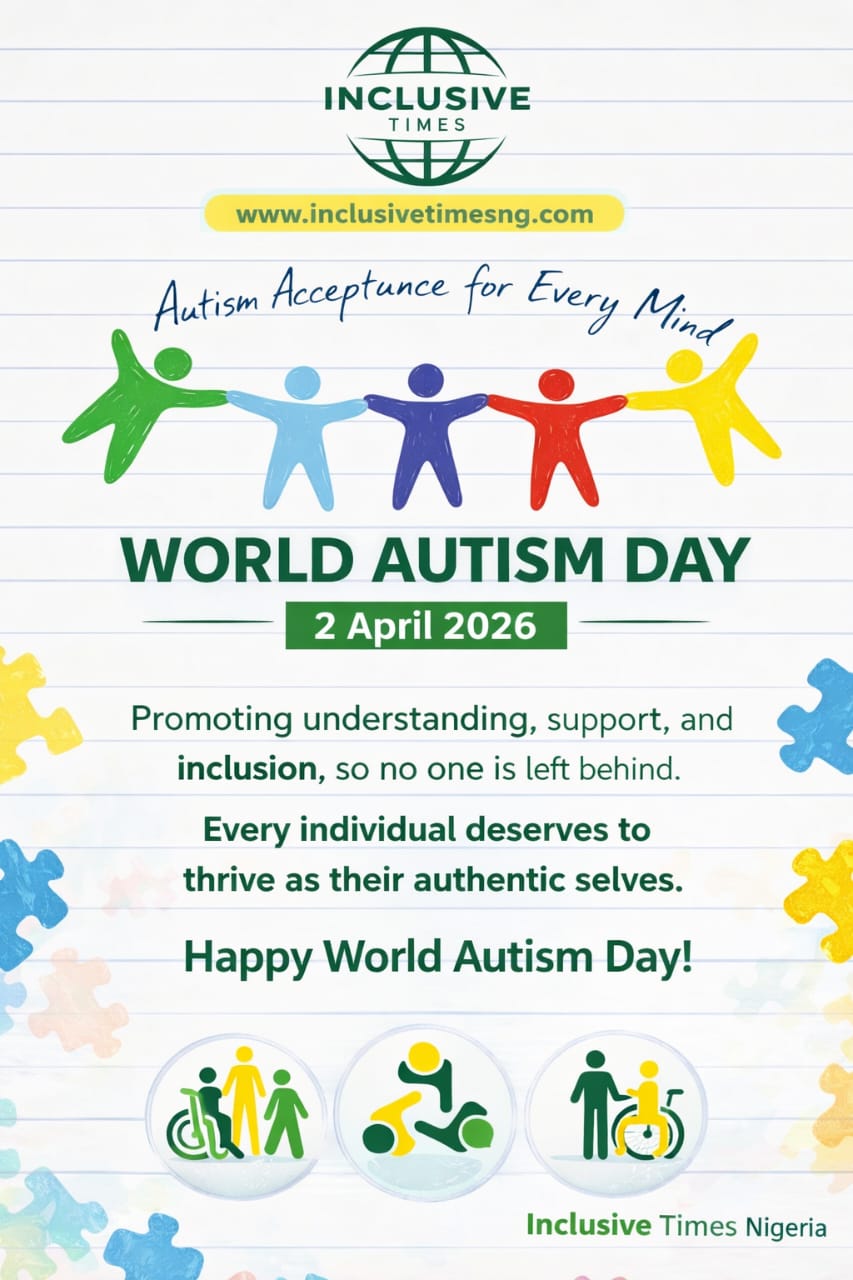
Thousands of children living with autism in Nigeria remain undiagnosed and unsupported, as the country continues to grapple with limited awareness, weak access to care and the absence of reliable national data.
Autism, a neurodevelopmental condition that affects communication, behaviour and social interaction, is increasingly recognised globally. The World Health Organization estimates that about one in every 100 children worldwide is on the autism spectrum, while the Centers for Disease Control and Prevention previously estimated the rate in the United States at one in 36 children.
In Nigeria, however, there is no comprehensive national database on autism, with most available figures drawn from small and isolated studies. Experts say this has created the false impression that autism is uncommon in the country.
Many Nigerian families raising children with autism are left to navigate the condition alone, often struggling to understand it, secure a diagnosis and afford treatment and therapy.
Early warning signs such as delayed speech, poor eye contact and repetitive behaviour are frequently overlooked, despite evidence that early diagnosis—particularly before the age of five—can significantly improve outcomes.
Access to specialised care remains limited, while therapies are often beyond the reach of many households. Inclusive education is also weak, leaving many autistic children excluded from schools or without adequate support in the classroom.
Although the Discrimination Against Persons with Disabilities (Prohibition) Act, 2018 guarantees inclusion for persons with disabilities, implementation has remained inconsistent across the country.
Advocates warn that the challenge extends beyond childhood, with little attention given to the long-term future of autistic children as they grow into adulthood.
They argue that autism itself is not the crisis, but rather the failure of the system to identify, support and include those living with the condition.