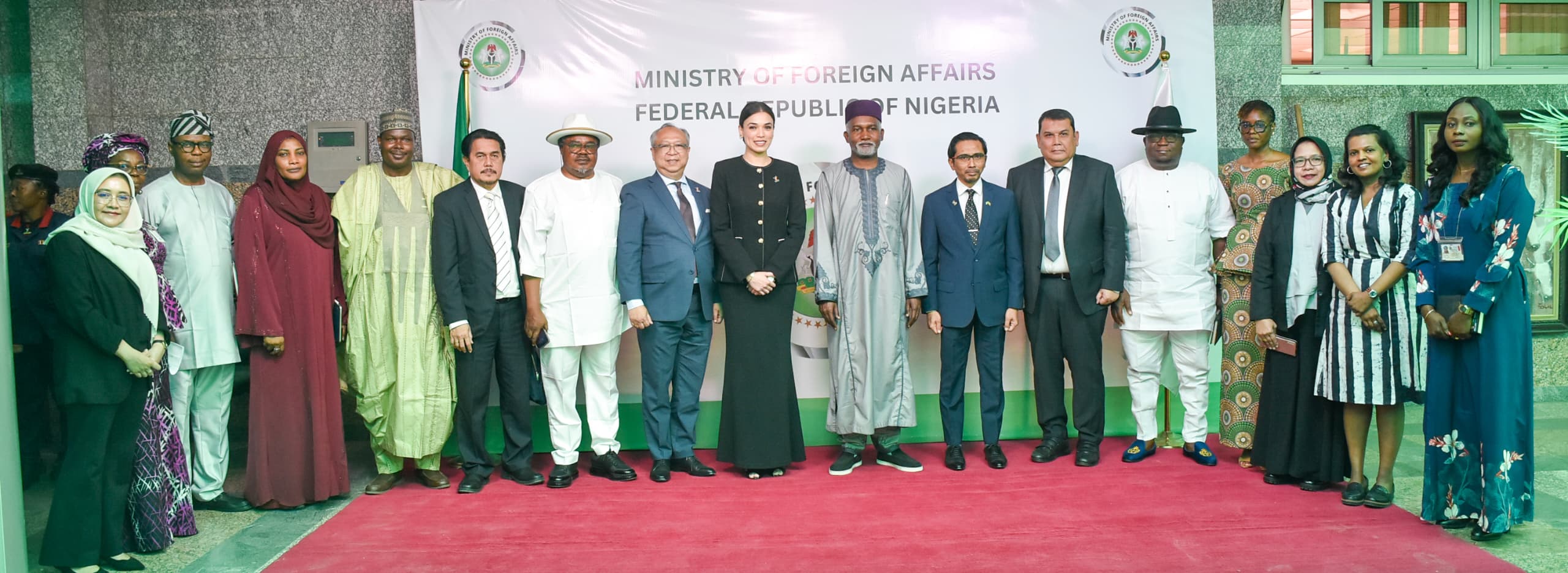
Nigeria has commenced high-level consultations on transitioning from observer status to full membership of the Council of Palm Oil Producing Countries (CPOPC), following a strategic meeting between the Minister of Foreign Affairs, Yusuf Maitama Tuggar, and the Council’s Secretary-General, Izzana Salleh.
The engagement, held on Friday at the Ministry of Foreign Affairs in Abuja, brought together senior ministry officials and representatives of CPOPC member states to deliberate on Nigeria’s potential elevation to full membership before the expiration of its current observer status later this year.
In her remarks, Salleh described the visit as both a courtesy call and a substantive policy dialogue aimed at strengthening institutional cooperation. She stressed the need for early consultations to ensure a seamless transition, noting that the Council remains a key diplomatic platform for palm oil producing nations.
According to her, the CPOPC represents major producers including Indonesia, Malaysia, Papua New Guinea, Honduras, and the Democratic Republic of Congo. While clarifying that the Council does not regulate output quotas, she explained that it plays a pivotal advocacy role in addressing trade barriers, sustainability standards, and regulatory frameworks affecting palm oil in global markets.
She cited the Council’s recent engagement with the European Union over the EU Deforestation Regulation (EUDR), where coordinated diplomacy and technical negotiations through a Joint Task Force helped articulate the position of producing countries. Salleh emphasized that the organization provides a unified voice for its members in multilateral platforms such as the United Nations and the World Bank, particularly in countering what she described as persistent misconceptions surrounding palm oil.
In a gesture aimed at encouraging Nigeria’s transition, the Secretary-General disclosed that the Council’s ministerial leadership had approved a two-year waiver of membership fees should Nigeria attain full membership. She described the move as strategic, designed to facilitate Nigeria’s integration into the Council’s advocacy and sustainability frameworks.
Salleh further highlighted CPOPC’s sustainability agenda, including knowledge transfer based on Indonesia’s ISPO and Malaysia’s MSPO certification systems under the Global Sustainable Palm Oil Framework (GSP-ISPO). She noted that the framework supports traceability, compliance, and improved market access for member countries, while placing emphasis on empowering smallholder farmers.
Also speaking, Mr. Tony Siew Lee, Director for Smallholders and Sustainability at CPOPC, underscored palm oil’s global relevance, stating that it accounts for roughly 60 percent of the world’s vegetable oil supply. He stressed that strengthening smallholder capacity through training and adherence to good agricultural practices remains critical to the sector’s long-term sustainability and contribution to food security and rural development.
Responding, Tuggar welcomed the delegation and reaffirmed Nigeria’s recognition of palm oil as a strategic commodity central to food security, industrial development, and economic diversification. He noted that palm oil historically supported industrial growth in Europe and continues to serve as a vital input in food production, pharmaceuticals, cosmetics, and manufacturing.
The Minister observed that Nigeria currently produces about 1.4 million metric tonnes of palm oil annually against a domestic demand of approximately 3 million metric tonnes, with plans underway to scale up production significantly.
Describing potential full membership of the CPOPC as consistent with the administration’s priorities on food security, youth employment, and economic growth, Tuggar said joining the Council would amplify Nigeria’s voice in global commodity diplomacy while enhancing access to coordinated advocacy and technical cooperation.
He further cautioned against allowing shifting global policy narratives to erode the competitiveness of producing nations, advocating instead for evidence-based engagement and stronger collaboration among palm oil producers.
The meeting concluded with an agreement to commence inter-ministerial consultations, particularly with the Federal Ministry of Agriculture and Food Security, to formalize Nigeria’s pathway toward membership. Salleh expressed appreciation for Nigeria’s positive disposition and reiterated the Council’s readiness to support the country’s integration process.
The discussions underscored the growing significance of palm oil diplomacy in global debates on trade, sustainability, and development, signaling Nigeria’s intent to assume a more prominent role in shaping the future of the sector.
The statement was issued by Kimiebi Imomotimi Ebienfa the spokesperson of the Federal Ministry of Foreign Affairs.
Business
Foreign
Nigeria Weighs Full Membership of Palm Oil Producing Council as Tuggar Hosts CPOPC Secretary-General