For millions of Nigerians living with disabilities, exclusion remains a painful daily reality despite years of policies, advocacy campaigns, and legal frameworks aimed at promoting inclusion.
From inaccessible roads and public buildings to limited access to healthcare, education, transportation, and employment opportunities, persons with disabilities continue to face systemic barriers across the country.
In Abuja, Nigeria’s capital city, widely regarded as a symbol of national development, many residents living with disabilities still struggle to navigate an urban environment that largely fails to accommodate their needs.
Wheelchair users confront broken walkways and inaccessible infrastructure, while visually impaired residents face transportation systems lacking accessibility support. Women and girls with disabilities remain particularly vulnerable to violence, discrimination, economic hardship, and social stigma.
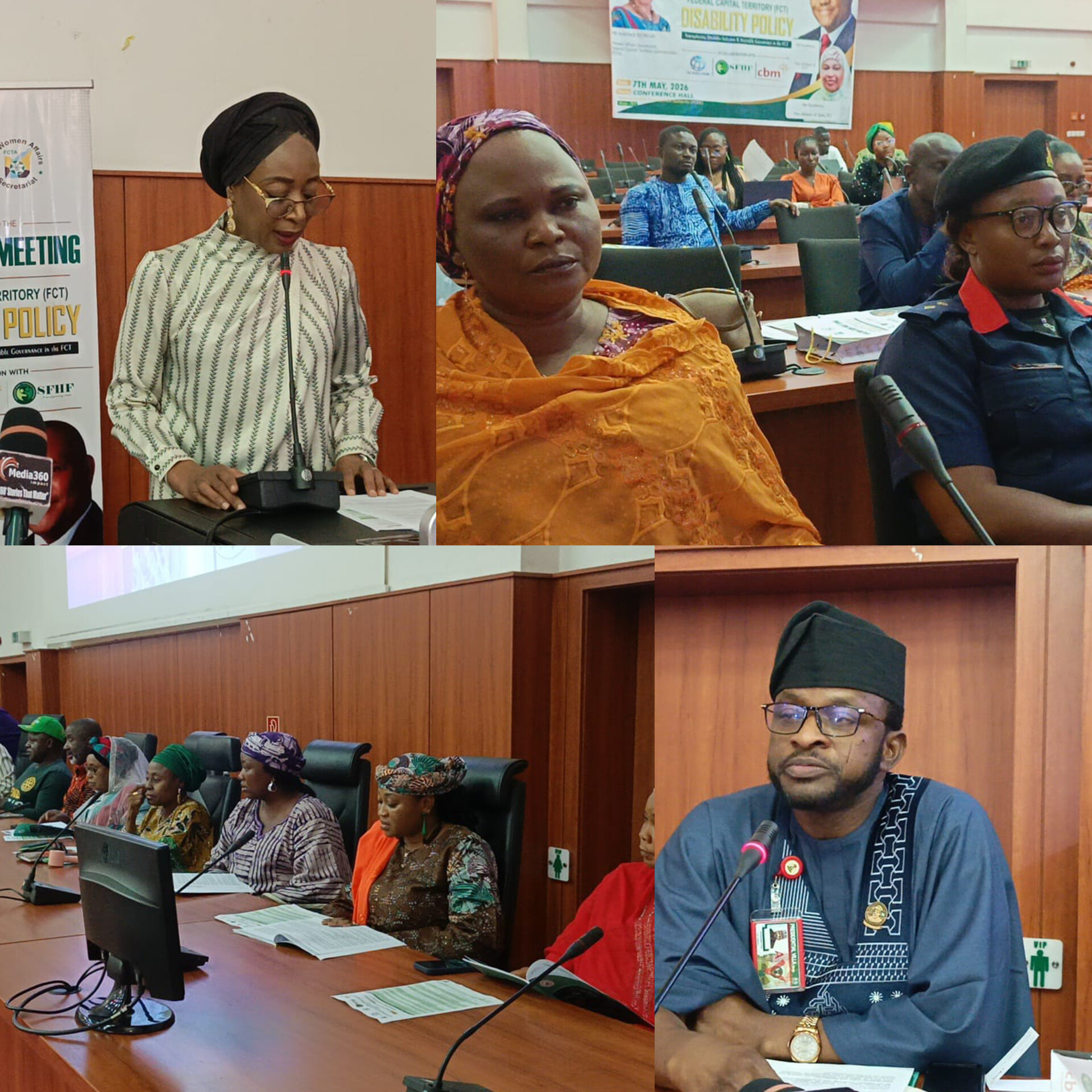
These concerns dominated discussions during the validation meeting of the proposed Federal Capital Territory (FCT) Disability Policy held in Abuja, where government officials, development partners, civil society groups, and disability advocates gathered to review the framework ahead of its expected approval.
Participants described the proposed policy as a potentially transformative step toward institutionalizing disability inclusion across governance, healthcare, education, infrastructure, urban planning, employment, and social protection systems within the FCT.
Adding a deeply emotional perspective to the discussions, Founder of the Centre for Ability, Rehabilitation and Empowerment (C.A.R.E.) and author of So What If I Am Not Like You, Dr. Chike Okogwu, delivered a speech titled “IT’S A GOAL!”, describing the policy validation as a defining moment for disability inclusion in the FCT.
According to him, the gathering signaled that disability rights were no longer an afterthought within the nation’s capital.
“Today is the sound of inclusion knocking loudly on the doors of governance. Today is the evidence that disability rights are no longer an afterthought in the Federal Capital Territory and when vision meets action, when compassion meets policy, when leadership meets humanity… it’s a goal,” he said.
Okogwu also recounted his personal journey following a devastating car accident on December 15, 2006, which altered the course of his life.
He praised Mandate Secretary of the FCT Women Affairs Secretariat, Hon. Dr. Adedayo Benjamin-Laniyi, for standing by him during one of the most difficult periods of his recovery, describing her support as an example of true leadership and humanity.
“She did not just sympathize from a distance. She showed up. She stood emotionally beside me when hope was fragile. She supported financially when medical and rehabilitation burdens became overwhelming,” he stated.
Mandate Secretary of the FCT Women Affairs Secretariat, Adedayo Benjamin-Laniyi, described the proposed disability policy as “a covenant” between the government and persons living with disabilities, stressing that residents with disabilities must no longer be treated as invisible members of society.
Stakeholders, however, warned that Nigeria’s major challenge lies not in the absence of policies, but in poor implementation.
Despite existing laws, including the Discrimination Against Persons with Disabilities (Prohibition) Act, many public buildings still violate accessibility standards, while discrimination and exclusion persist across sectors.
Discussions also highlighted the disproportionate burden faced by women and girls with disabilities, who often experience multiple layers of exclusion, including limited access to healthcare, education, political participation, and economic opportunities.
Permanent Secretary of the FCT Women Affairs Secretariat, Dr. Asmau Mukhtar, emphasized the need to integrate accessibility into Abuja’s infrastructure and urban planning systems to ensure the city becomes more inclusive.
The meeting repeatedly echoed the globally recognized disability rights principle, “Nothing About Us Without Us,” with advocates insisting that persons with disabilities must be actively involved in policymaking, implementation, monitoring, and evaluation processes affecting their lives.
Development partners, including the Sustainable Family Healthcare Foundation (SFHF), CBM International, and the World Bank, also stressed the need for genuine institutional commitment to ensure the policy does not become another abandoned framework.
Executive Secretary of the National Commission for Persons with Disabilities, Ayuba Gufwan, disclosed that more than 35 million Nigerians currently live with disabilities, while nine out of every ten require assistive devices such as wheelchairs, hearing aids, prosthetics, and mobility aids, most of which are imported and increasingly unaffordable due to economic hardship.
Stakeholders at the meeting maintained that the real test of the proposed FCT Disability Policy would lie in implementation, particularly in improving accessibility, education, healthcare, employment opportunities, and protection for persons living with disabilities.
Many participants expressed hope that the validation exercise could mark the beginning of a broader shift toward treating disability inclusion not as charity or political symbolism, but as a fundamental issue of human rights, governance, and national development.