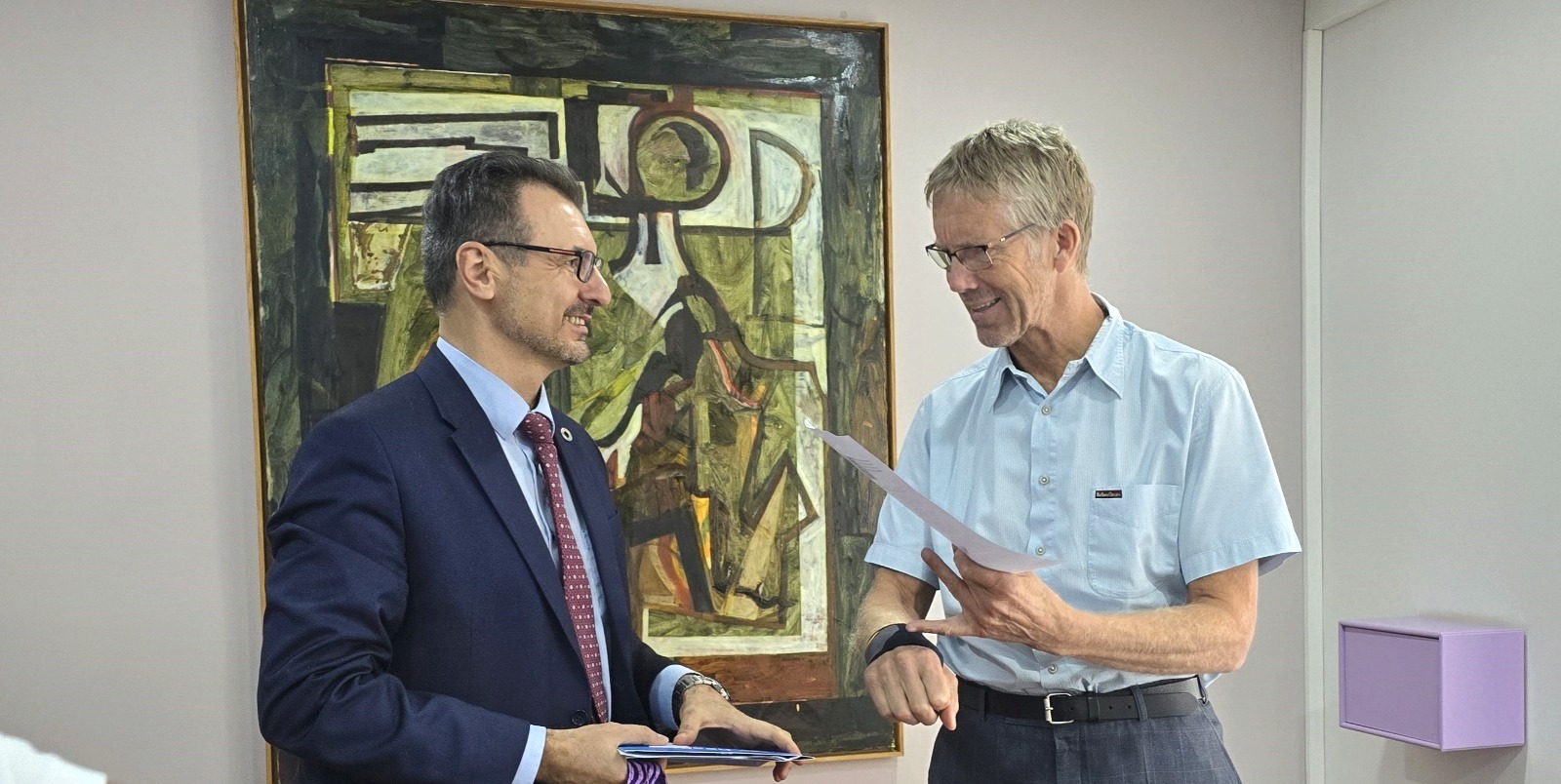
The World Health Organization (WHO) has reaffirmed its commitment to supporting Nigeria’s health sector through strengthened collaboration with the Government of Norway.
WHO Representative in Nigeria, Pavel Ursu, held talks with the Norwegian Ambassador to Nigeria, Svein Baera, in Abuja, focusing on deepening cooperation to build a more resilient health system and improve health outcomes across the country.
The meeting underscored a shared commitment to accelerating progress towards Nigeria’s national health targets, with emphasis on health security, disease surveillance, and primary healthcare delivery.
WHO highlighted ongoing efforts with partners, including Norway, to strengthen primary healthcare systems, expand digital health infrastructure, and enhance real-time disease surveillance. Central to this is the scale-up of the District Health Information System 2 (DHIS2), supported by the University of Oslo, which plays a key role in improving national data systems and enabling timely, evidence-based decision-making.
Despite progress, immunisation coverage in Nigeria remains below the global benchmark of 90 percent. Health authorities are intensifying efforts to reach zero-dose children, strengthen routine immunisation services, and address longstanding equity gaps.
The partners also stressed the need for robust surveillance systems and a well-trained frontline workforce to halt the transmission of variant poliovirus. WHO continues to support capacity building, data integration, and increased domestic investment, alongside contributions from development partners.
The engagement concluded with a renewed call for stronger systems, improved data management, and coordinated partnerships to drive measurable health gains across Nigeria.
Health
WHO, Norway Strengthen Partnership to Boost Nigeria’s Health System