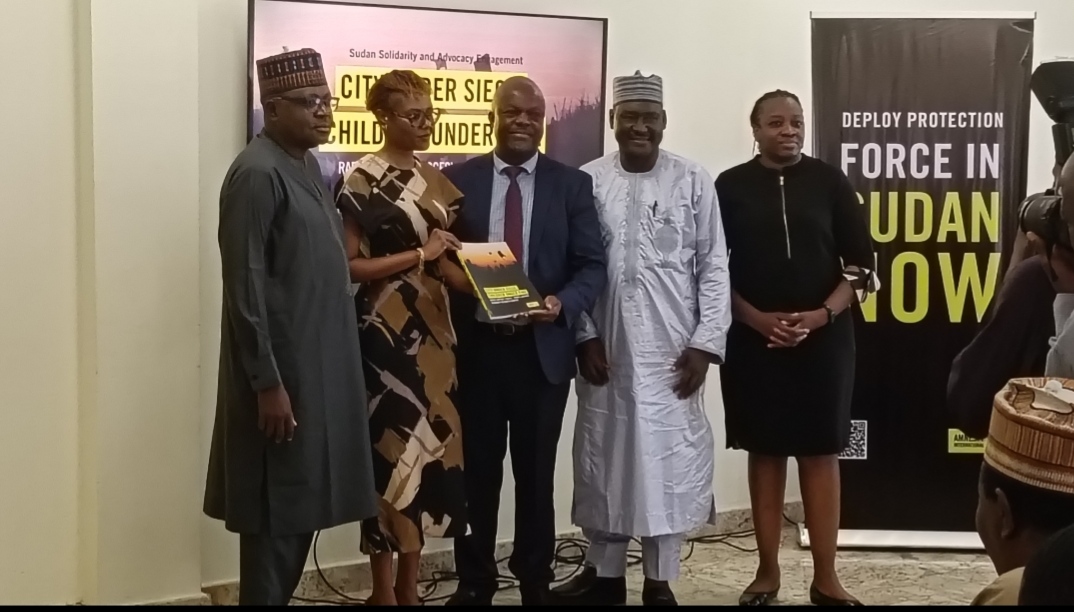
The Chairman of the Board of Trustees of Amnesty International Nigeria, Comrade Auwal Musa Rafsanjani, has called on the Nigerian government, regional bodies and the international community to take urgent steps to address the worsening humanitarian crisis in Sudan.
Speaking on Wednesday at the Sudan Solidarity and Advocacy Engagement held in Abuja, Rafsanjani said the event was organised by Amnesty International Nigeria in collaboration with the organisation’s East and Southern Africa Regional Office to draw attention to the plight of civilians affected by the conflict.
He said the engagement was aimed at amplifying the voices of thousands of victims whose suffering has largely remained outside global attention, stressing that every human life deserves protection regardless of nationality, ethnicity or political affiliation.
Rafsanjani presented Amnesty International’s report titled “City Under Siege, Children Under Fire: Rapid Support Forces’ Crimes against Humanity in North Darfur,” which was globally launched on July 1, 2026. According to him, the report documents alleged crimes against humanity committed during the campaign to seize El Fasher in North Darfur, including deliberate attacks on civilians, unlawful killings, mass displacement, sexual violence, destruction of civilian infrastructure and violations that have disproportionately affected children and other vulnerable groups.
Describing the Sudan conflict as one of the world’s worst humanitarian crises, he said millions of people have been displaced, healthcare systems have collapsed in several areas, humanitarian access remains restricted and countless families continue to face severe hardship.
He noted that behind the humanitarian statistics are families forced from their homes, children denied access to education and communities struggling to survive.
Rafsanjani said Nigeria, as Africa’s most populous nation and a key player in regional peace efforts, has an important role to play in promoting peace and stability on the continent.
He urged the Nigerian government, the African Union, the United Nations, ECOWAS and the wider international community to work towards securing an immediate and lasting ceasefire, guaranteeing unhindered humanitarian access, protecting civilians, supporting credible investigations into alleged human rights violations and promoting inclusive dialogue that prioritises the welfare of Sudanese civilians.
He warned that silence in the face of atrocities encourages impunity, adding that timely justice is essential to restoring hope for millions of people affected by the conflict.
The Amnesty International Nigeria Board Chairman also welcomed representatives from the organisation’s East and Southern Africa Regional Office, who travelled from Nairobi and Johannesburg to participate in the engagement, describing their presence as a demonstration of cross-border collaboration in advancing human rights and peace across Africa.
He expressed appreciation to civil society organisations, diplomatic missions, policymakers, traditional and religious leaders, development partners and the media for attending the event, urging stakeholders to translate expressions of concern into concrete actions that would help end the suffering in Sudan.
Rafsanjani stressed that the people of Sudan deserve not only global sympathy but also sustained solidarity, justice and lasting peace.