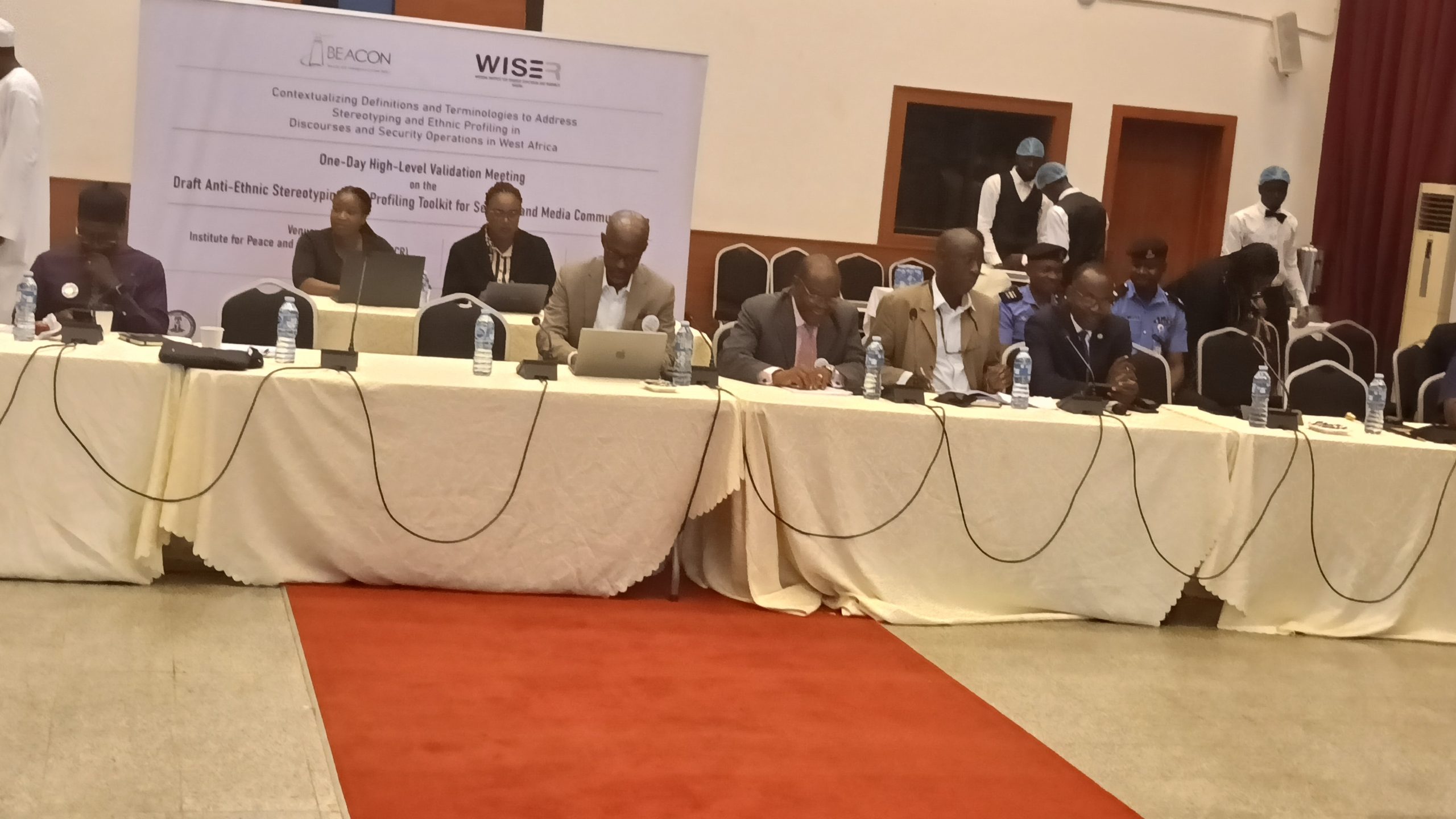
The Federal Government and security experts have called for an end to ethnic profiling, stereotypes and prejudicial labels in security reporting, warning that such practices could heighten social tensions, entrench harmful narratives and undermine national unity.
The stakeholders made the call during the validation of the Draft Anti-Stereotyping and Ethnic Profiling Toolkit for Media and Security Reporting in Nigeria, where they urged the military, security agencies and media organisations to uphold professionalism and responsible conduct in both operations and reporting.
Speaking at the event, President of the WhiteInk Institute for Strategy Education and Research (WISER), retired Brig.-Gen. Saleh Bala, stressed the vital role of the media in shaping public opinion, informing citizens and supporting democratic governance.
He noted that security institutions also have a responsibility to safeguard national security while maintaining public trust and confidence.
Bala said the language, narratives and labels used in reporting and official communication could either foster understanding, inclusion and peace or reinforce stereotypes, encourage ethnic profiling and deepen divisions among communities.
He described Nigeria’s diversity as one of its greatest strengths, adding that reporting on security, conflict, ethnicity, religion, gender and regional identities requires a high level of responsibility.
He further noted that the challenge extends beyond traditional media and security reporting to social media platforms and everyday interactions, where stereotypes and ethnic profiling can spread quickly and influence public perceptions.
According to him, the draft toolkit is a significant step towards strengthening national cohesion by providing practical guidance for media practitioners, security communicators and other stakeholders on identifying and avoiding harmful stereotypes and prejudicial narratives.
Also speaking, Director-General of the Institute for Peace and Conflict Resolution (IPCR), Dr. Joseph Ochogwu, described the validation exercise as a landmark initiative aimed at promoting peace, security and responsible communication in Nigeria. Represented by the Director of Internal Conflict Prevention and Resolution, Dr. Gerald Okafor, he said the project reflects a commitment to addressing identity-based conflicts while fostering mutual understanding, peaceful coexistence and sustainable development.
Ochogwu commended Beacon Security and Intelligence Limited (BSIL) and WISER for developing the toolkit through extensive consultations, brainstorming sessions and strategic engagements focused on tackling stereotyping and ethnic profiling in security operations and public discourse across West Africa.
Providing an overview of the project, Managing Director of BSIL, Dr. Kabiru Adamu, said the language used by security agencies, policymakers, media organisations and commentators has a significant impact on public perception, policy responses and intelligence gathering.
He explained that the toolkit emerged from extensive research and consultations designed to address ethnic profiling and stereotyping in security operations and public discourse across the region.
The validation meeting was jointly organised by BSIL, WISER, the National Counter Terrorism Centre, the Ministry of Information and the IPCR, with support from the Strengthening Peace and Resilience in Nigeria (SPRiNG) Programme funded by the United Kingdom’s Foreign, Commonwealth and Development Office (FCDO).