The Sustainable Family Healthcare Foundation, in collaboration with Christian Blind Mission, has called on journalists and other stakeholders to strengthen media engagement in promoting the rights of persons with disabilities and supporting the implementation of Nigeria’s disability law.
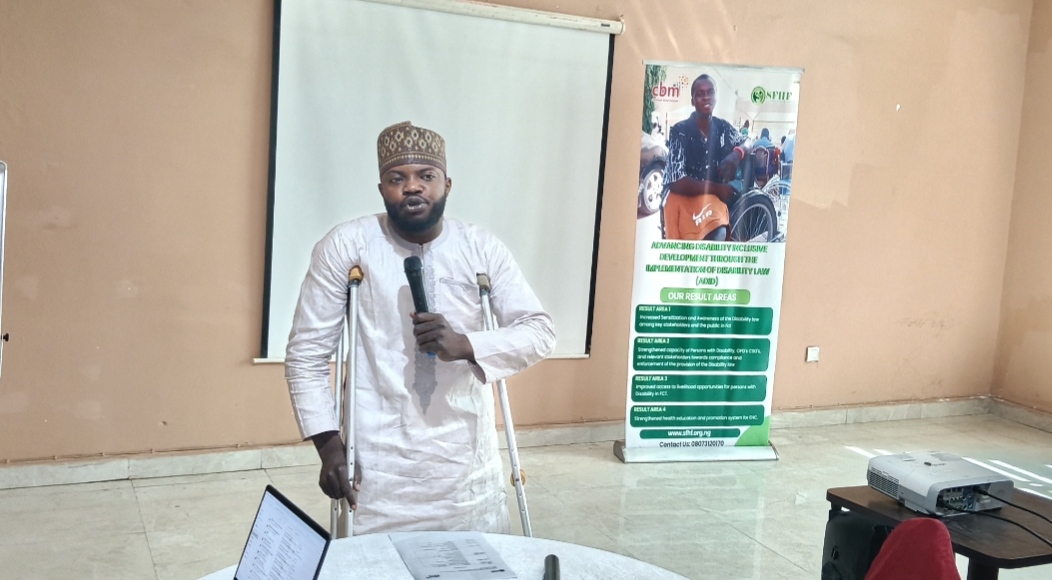
Speaking during the opening of a media training programme, the Coordinator of the Sustainable Family Healthcare Foundation, Mary Sunday, said the initiative was designed to increase public awareness of disability issues, reduce stigma and encourage stronger advocacy for the rights of persons with disabilities.
She said the programme would provide a platform to engage policymakers and other duty bearers on the effective implementation of the Discrimination Against Persons with Disabilities (Prohibition) Act, stressing that while the law exists, greater commitment is required to ensure its enforcement across all sectors.
According to her, the media has a critical role to play in amplifying the voices of persons with disabilities and their representative organisations, promoting public understanding of disability issues and encouraging inclusive development. She also called for continuous capacity building for journalists to improve accurate and impactful reporting on disability-related issues.
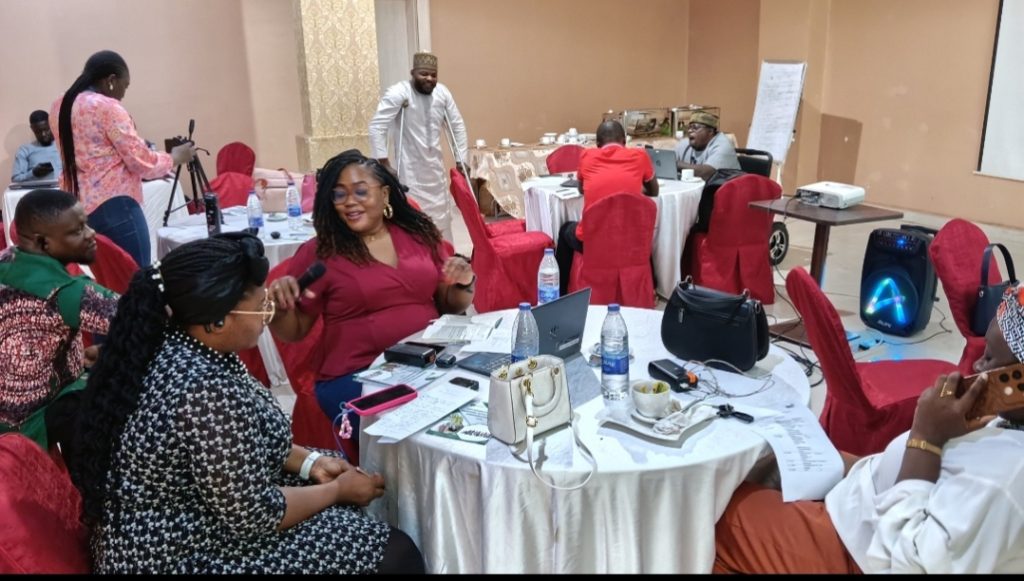
Mary Sunday added that the programme would also enlighten participants on available services, legal protections and opportunities for persons with disabilities in education, employment, healthcare and social protection, expressing confidence that the training would strengthen advocacy efforts and improve protection of disability rights.
Also speaking, disability rights advocate Musa Mu’azu Musa urged journalists to embrace rights-based reporting and hold relevant institutions accountable for implementing disability laws and policies.
He explained that disability laws provide the legal framework for protecting the rights of persons with disabilities, while policies serve as practical guidelines for implementation. According to him, 35 states and the Federal Capital Territory have enacted disability laws, while 18 states have established disability commissions or agencies to oversee implementation.
Musa noted that although the National Commission for Persons with Disabilities is headquartered in Abuja, the Federal Capital Territory should establish its own disability agency in line with its status as a state-equivalent administrative territory.
He stressed that disability rights are legal entitlements rather than privileges and include equal access to education, employment, healthcare, public services and accessible infrastructure. He also highlighted the provision of Nigeria’s disability law requiring public and private employers to reserve at least five per cent of employment opportunities for persons with disabilities.
The facilitator explained that accessibility extends beyond physical infrastructure, noting that meaningful inclusion requires reasonable accommodations such as sign language interpretation and other support services that enable full participation.
He further urged journalists to understand the responsibilities of government institutions and other stakeholders in disability advocacy, stressing that effective reporting should focus on monitoring implementation of existing laws rather than merely calling for new legislation.
Musa encouraged media practitioners to consistently report on disability issues, monitor compliance with accessibility standards and amplify the voices of persons with disabilities to promote inclusion nationwide.
In his remarks, disability advocate Chris Agbo described the media as an indispensable partner in advancing disability rights and social inclusion.
He said journalists have consistently supported disability advocacy by giving visibility to the concerns of persons with disabilities and helping to amplify their voices during campaigns and public engagements.
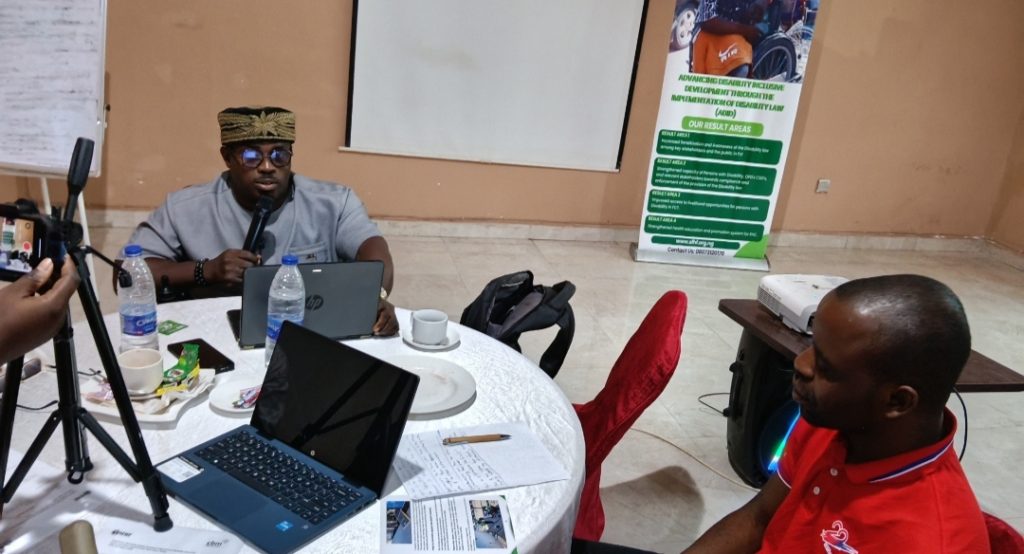
According to Agbo, the training is aimed at deepening participants’ understanding of the Disability Act, strengthening their capacity to report disability issues professionally and equipping them with practical skills to produce stories that challenge discrimination, promote inclusion and drive positive social change.
He urged media professionals to ensure their reporting advances disability inclusion, noting that the way disability issues are covered plays a significant role in shaping public perception and fostering a more inclusive society.