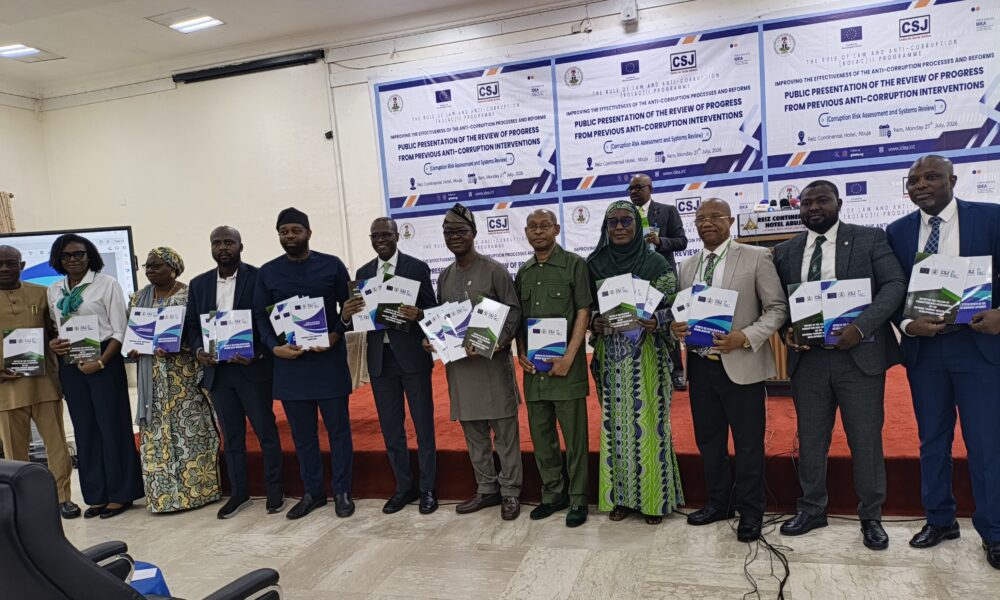
The Independent Corrupt Practices and Other Related Offences Commission (ICPC) has unveiled corruption risk assessment reports on key public institutions, calling for comprehensive reforms, digital governance and stronger inter-agency collaboration to tackle corruption in Nigeria’s health and education sectors.
Speaking at the public presentation of the reports on Monday, ICPC Chairman, Dr. Musa Adamu Aliyu, described the initiative as a significant step in the Commission’s preventive anti-corruption strategy aimed at enhancing transparency, accountability and efficient service delivery.
Aliyu said the assessments should serve as practical tools for institutional reform rather than remain mere documents, stressing that the reviewed institutions play critical roles in healthcare delivery and education, which are central to Nigeria’s human capital development.
He disclosed that the assessments uncovered several corruption risks, including leakages in health insurance payments, diversion of medical supplies, ghost workers, procurement irregularities, abandoned school projects and weak oversight systems.
According to him, the Commission has strengthened its internal governance through merit-based recruitment, digitisation of operations, improved audit systems, conflict-of-interest declarations and enhanced compliance mechanisms.
The ICPC chairman identified digital transformation as a key instrument for preventing corruption, saying technology promotes transparency, reduces human discretion and strengthens accountability. He also advocated integrated digital platforms to enable citizens monitor health insurance enrolment, primary healthcare services and education projects, alongside stronger oversight, e-procurement systems, improved staff welfare and stricter sanctions against abandoned public projects.
Earlier, Lead Director of the Centre for Social Justice (CSJ), Dr. Eze Onyekpere, said the organisation partnered with the ICPC under the European Union-funded Rule of Law and Anti-Corruption Programme to assess the implementation of recommendations from previous corruption risk assessments.
He explained that the review covered the National Health Insurance Authority (NHIA), National Primary Health Care Development Agency (NPHCDA) and Universal Basic Education Commission (UBEC), with the objective of strengthening anti-corruption reforms, improving compliance and enhancing governance at national and sub-national levels.
Onyekpere stressed that sustained implementation of recommendations, collaboration among anti-corruption agencies, regulatory bodies, civil society organisations and development partners, as well as institutionalised peer reviews, are essential to preventing corruption and promoting best practices.
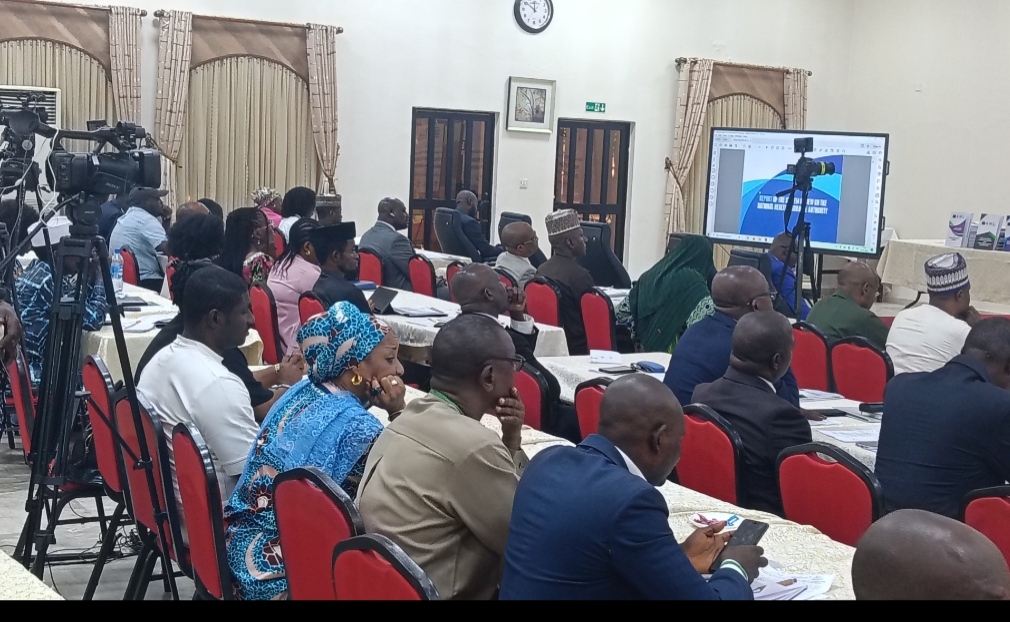
Also speaking, European Union representative Emma Uche commended the ICPC for prioritising preventive anti-corruption measures, noting that building systems that prevent corruption is more effective than relying solely on prosecution after public funds have been lost.
She praised the Commission’s collaborative approach, expressing confidence that the reports would provide a roadmap for strengthening institutional integrity, improving transparency and enhancing public sector performance.
The event attracted senior government officials, civil society organisations, development partners and other stakeholders committed to promoting integrity and good governance in Nigeria.