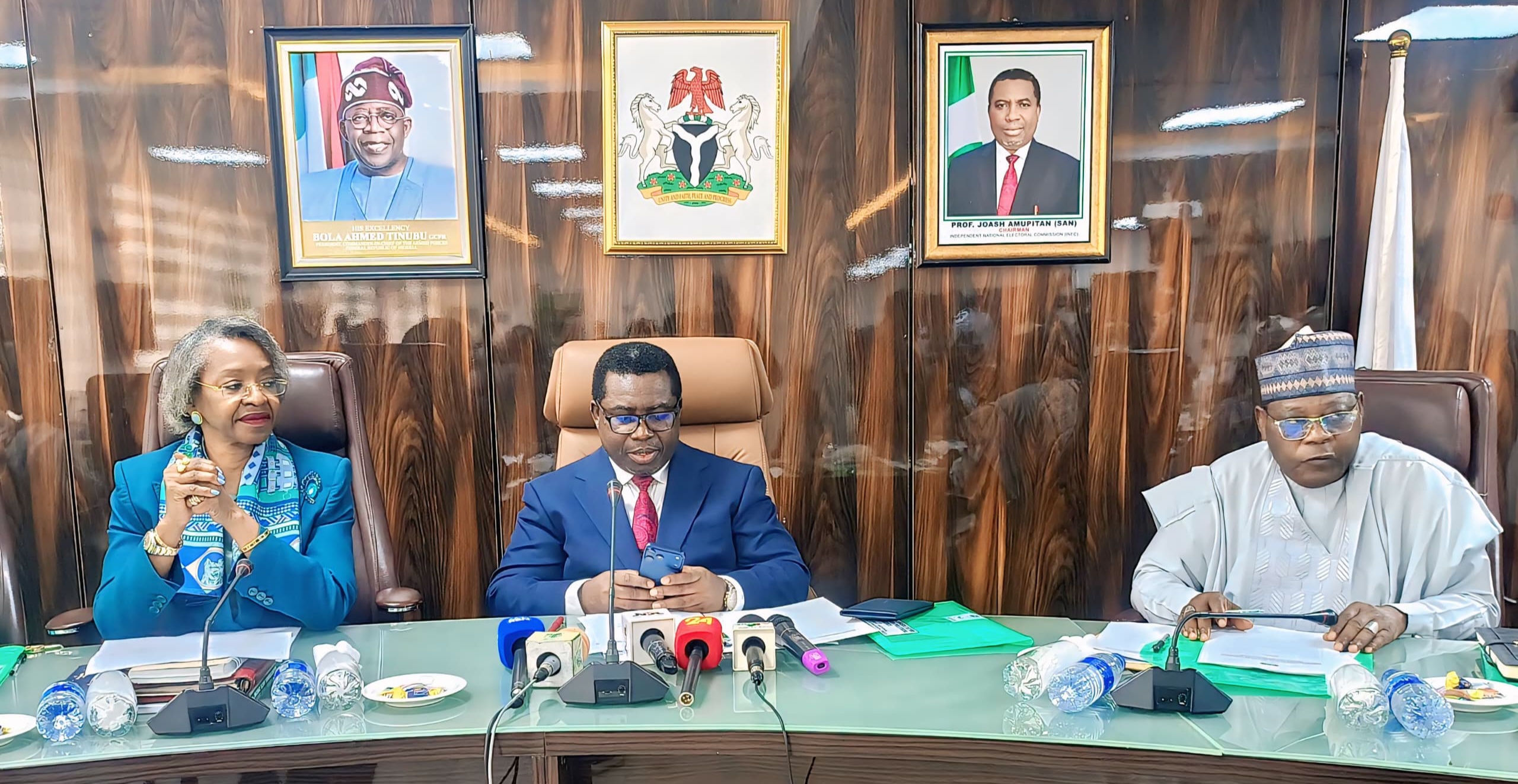
The Chairman of the Independent National Electoral Commission (INEC), Prof. Joash Amupitan, has assured Nigerians that preparations for upcoming elections are on course, with logistics, deployment of election technology, training of officials, and stakeholder engagements progressing according to schedule.
Amupitan disclosed this during the second quarterly consultative meeting between INEC and leaders of registered political parties held in Abuja on Tuesday. He stated that arrangements had been concluded to ensure the simultaneous opening of 2,445 polling units across the 16 local government areas of the affected state.
He also confirmed that bye-elections would hold on the same day in six constituencies across Enugu, Nasarawa, Rivers, Ondo, Kano, and Kebbi states.
The INEC Chairman further urged political parties to adhere strictly to timelines for the Osun State Governorship Election scheduled for August 15, while also preparing for the candidate nomination process ahead of the 2027 General Election.
According to him, political parties would receive official access codes on June 26 to enable them upload candidates’ details through the Commission’s automated nomination portal.
Amupitan, however, expressed concern over the rising number of court cases arising from leadership disputes within political parties, warning that such litigations could distract the Commission and undermine preparations for future elections.
Meanwhile, the Inter-Party Advisory Council (IPAC) has called on the National Assembly to review the Electoral Act 2026 in collaboration with relevant stakeholders to address operational challenges experienced during the recent party primaries.
Speaking at the meeting, IPAC National Chairman, Dr. Yusuf Mamman Dantalle, said the current electoral framework should promote democratic participation, strengthen political institutions, and support healthy political competition.
Dantalle noted that the credibility of elections begins with transparent and legitimate candidate nomination processes within political parties, stressing that the integrity of the electoral system is closely tied to internal party democracy.
He explained that the just-concluded primaries for the 2027 General Election exposed significant legal, administrative, and operational difficulties, particularly due to the provisions of Section 84(2) of the Electoral Act 2026, which restricted parties to either consensus or direct primaries while excluding indirect primaries.
According to him, the restrictions created major challenges for political parties in conducting primaries for presidential, governorship, National Assembly, and State Assembly elections.
Dantalle stressed the need to restore public confidence in the electoral process ahead of the Ekiti and Osun governorship elections as well as the 2027 general polls.
He also urged political actors to embrace issue-based campaigns and reject violence, intimidation, hate speech, and political extremism, condemning recent incidents of political violence in Osun State.
The IPAC chairman further called on security agencies to remain professional and neutral in carrying out their responsibilities throughout the electoral cycle.
He reaffirmed the Council’s commitment to working with INEC, the National Assembly, civil society groups, security agencies, and development partners to strengthen democratic governance and electoral integrity in Nigeria.