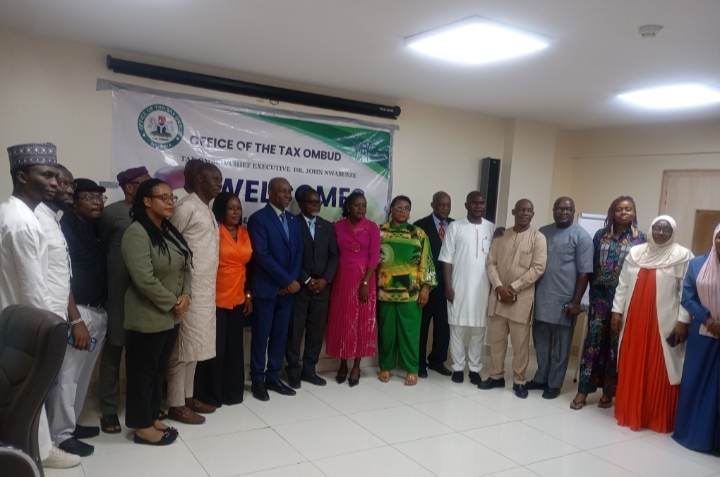
The Tax Ombud of Nigeria, Dr. John Nwabueze, has called on financial journalists to support ongoing tax reforms by educating Nigerians on taxpayers’ rights and dispute resolution mechanisms under the new tax administration framework.
Speaking during a breakfast meeting with financial correspondents in Abuja on Tuesday, Dr. Nwabueze described the establishment of the Office of the Tax Ombud as a major step toward promoting transparency, accountability, fairness, and public confidence in Nigeria’s tax system.
He commended President Bola Ahmed Tinubu for driving reforms aimed at creating a fair, inclusive, and sustainable tax structure, while also praising the Minister of Finance and Coordinating Minister of the Economy, Taiwo Oyedele, for his leadership in the reform process.
According to him, the Office of the Tax Ombud was created to provide accessible, timely, and cost-effective mechanisms for resolving tax-related disputes and strengthening voluntary tax compliance.
Dr. Nwabueze explained that the office would serve as an independent bridge between taxpayers and revenue authorities through mediation, conciliation, stakeholder engagement, and alternative dispute resolution processes designed to reduce prolonged litigation and improve institutional efficiency.
He further disclosed that the office recently unveiled its website, call centre, and case management portal to enable taxpayers, businesses, and other stakeholders submit complaints online or by phone and track their cases in real time.
The Tax Ombud noted that the initiative is aimed at helping citizens better understand the tax system, fulfil their tax obligations, and contribute to national development.
He urged members of the media to use their platforms to enlighten the public on procedures for filing tax complaints and grievances, stressing that collaboration with journalists would be vital to the success of the reform process.
Dr. Nwabueze also reaffirmed the commitment of the Office of the Tax Ombud to building trust between taxpayers and revenue authorities through fairness and accessible dispute resolution mechanisms.
Business
Tax Ombud Seeks Media Partnership on Tax Reform Awareness