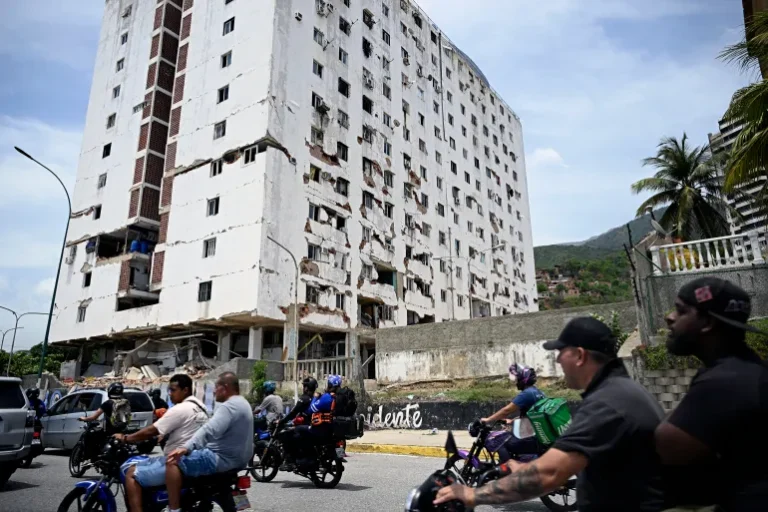
At least 188 people have been confirmed dead and more than 1,500 others injured after two powerful earthquakes struck Venezuela’s northern coast on Wednesday, June 24, 2026, causing widespread destruction and trapping residents beneath collapsed buildings.
President of the National Assembly, Jorge Rodriguez, disclosed that about 200 people were still believed to be trapped under rubble as emergency teams continued search and rescue efforts in severely affected areas, including Caracas, La Guaira state, and Catia La Mar.
The United States Geological Survey reported that the first earthquake had a magnitude of 7.2, followed less than a minute later by a stronger 7.5 magnitude tremor. The earthquakes caused buildings to collapse, damaged roads, and forced hospitals to evacuate patients as panic spread across affected communities.
Residents in Caracas described scenes of fear and confusion as buildings shook violently. One resident said he initially thought the noise was caused by construction work before realizing it was an earthquake. He said he fled down the stairs with his girlfriend when the second, more powerful quake struck, recalling the experience as similar to the devastating 1967 Caracas earthquake.
In Los Corales, La Guaira state, located about 38 kilometres northwest of Caracas, residents moved through damaged areas as authorities assessed the safety of buildings. In Catia La Mar, patients were seen receiving care outside an evacuated hospital after the facility sustained damage.
The United States announced $150 million in emergency assistance to support recovery efforts. The aid package includes funding for humanitarian organisations operating on the ground, while additional support will be provided through the United Nations Office for the Coordination of Humanitarian Affairs.
Washington also said it would deploy a Disaster Assistance Response Team made up of search-and-rescue experts, with support from the Department of Defense.
Meanwhile, Colombia’s capital, Bogotá, announced the deployment of rescue specialists, including collapsed-structure experts and a trained search dog, as part of a 64-member emergency response team.
Other countries have also offered assistance, with Turkey pledging continued support after Foreign Minister Hakan Fidan discussed Venezuela’s needs with his counterpart. Iran also expressed condolences, while the World Bank said it was engaging Venezuelan authorities on possible technical assistance and coordination with international partners.
The disaster response has been complicated by damage to communication networks, with authorities working to coordinate rescue operations. Displaced residents have been moved into temporary accommodation, including hotels, while engineers inspect older buildings for structural safety.
Caracas resident Alejandro San Cristobal, 60, described the earthquake as sounding “like a locomotive,” saying dust filled the streets during the tremors. He said his building survived, although a rooftop water tank was damaged, unlike other structures where walls collapsed.
In the United States, the Congressional Hispanic Caucus called on the Trump administration to suspend deportations to Venezuela, arguing that returning people to a country facing an active disaster would be inappropriate. The group also renewed calls for the restoration of Temporary Protected Status for Venezuelans.
Rescue workers, police officers, and volunteers continue searching through rubble in Los Palos Grandes, Caracas, and other badly affected communities as aftershocks continue to cause concern among residents. Authorities have declared a state of emergency and warned citizens to remain cautious.
Officials said the death toll could increase as rescue teams gain access to more collapsed sites and continue recovery operations.